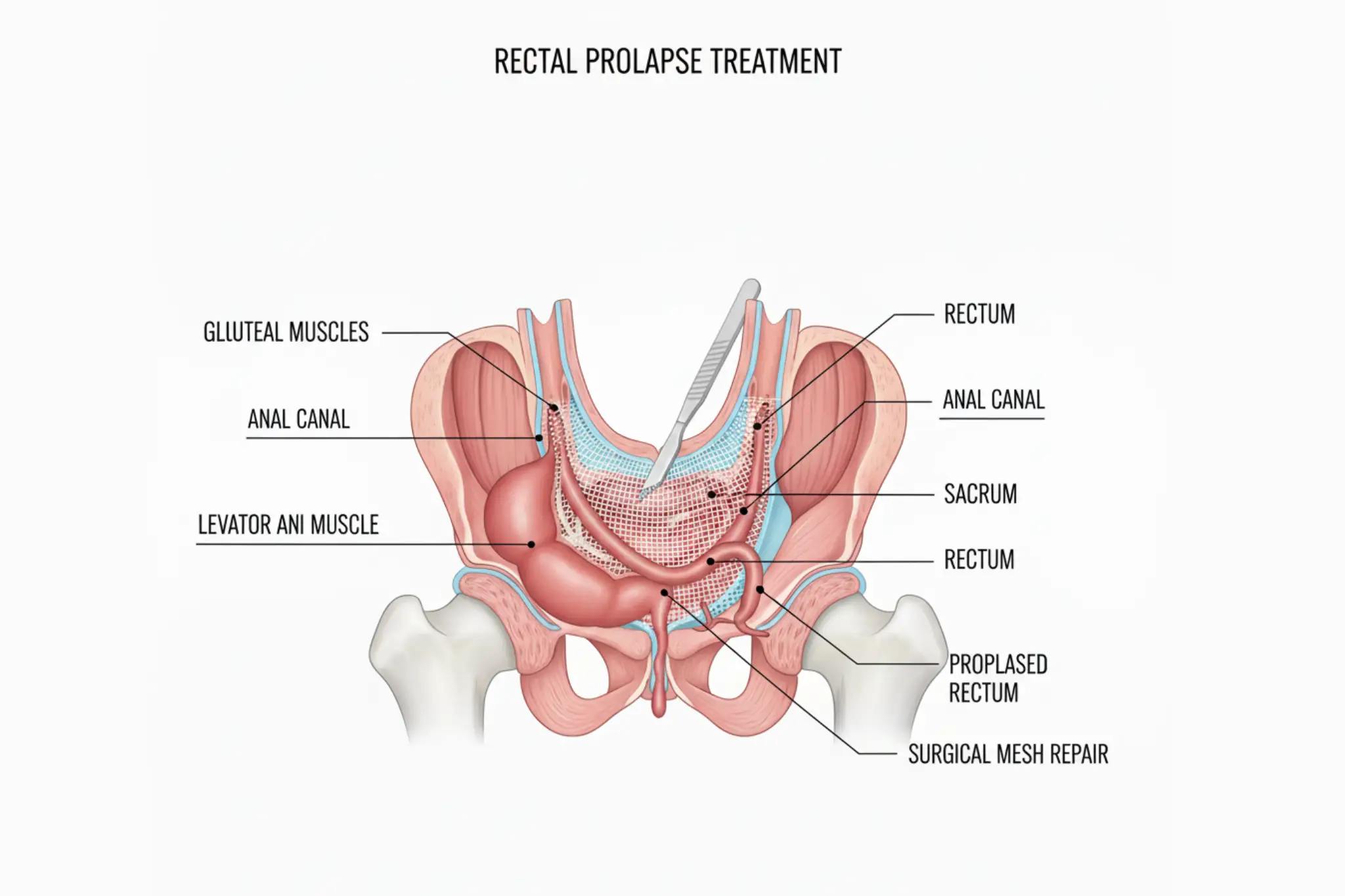
Rectal prolapse occurs when the rectum, the final section of the large intestine, loses its normal attachments inside the body and protrudes through the anus. This condition can worsen over time, leading to severe complications and difficulty in bowel control if left untreated.
While both conditions affect the anal region, they are not the same:
- Piles (Hemorrhoids): Swollen blood vessels inside or around the anus.
- Rectal Prolapse: The rectum itself protrudes outside the anus.
Dr. Patil ensures accurate diagnosis to recommend the best treatment, as piles are usually treated with laser or stapler surgery, while rectal prolapse may require STARR Surgery or other rectopexy procedures.
Dr. Atul Patil offers both conservative and surgical treatments:
- Dietary and lifestyle modification for mild cases.
- Pelvic floor strengthening exercises.
- Rectopexy Surgery – to restore the rectum’s normal position.
- STARR Surgery – advanced minimally invasive technique for internal prolapse.
Recovery & Aftercare: Most patients recover within 1–2 weeks post-surgery. Regular follow-up at Vithai Piles Clinic helps ensure complete healing and bowel regularity. Dr. Patil provides personalized post-treatment care instructions.
Q1. Is rectal prolapse life-threatening?
No, but if left untreated, it can cause chronic discomfort and incontinence.
Q2. Can rectal prolapse heal without surgery?
Mild cases might improve with diet and physiotherapy, but most require surgery.
Q3. What is the success rate of rectal prolapse surgery in Pune?
Over 95% success at Vithai Piles Clinic with modern STARR and rectopexy techniques.
Q4. Is it safe for elderly patients?
Yes, minimally invasive procedures like STARR are safe and have quick recovery times.
Q5. How long does it take to return to normal life?
Usually within 1–2 weeks post-procedure, depending on overall health.
Areas Served: Vithai Piles Clinic is one of Pune’s trusted centers for rectal prolapse treatment, serving patients from Baner, Wakad, Aundh, Hinjawadi, and Pimple Saudagar.