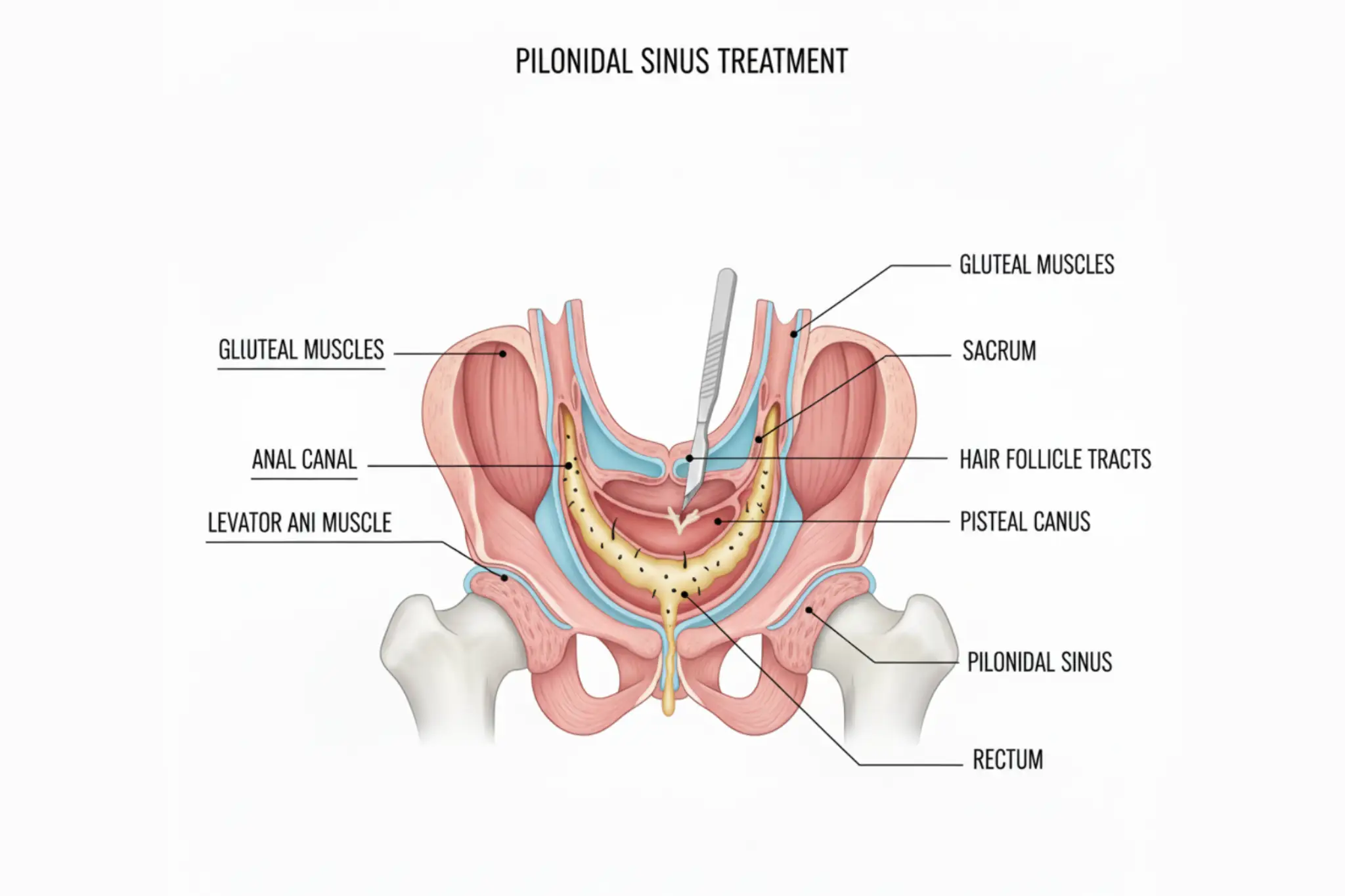
A pilonidal sinus is a small tunnel or cavity that develops under the skin near the tailbone, typically filled with hair, debris, or pus. It can cause redness, pain, and recurrent infections. If not treated early, the condition can become chronic, leading to abscess formation and persistent discharge.
1. Laser Pilonidal Sinus Surgery
Laser-assisted surgery is a minimally invasive method that uses focused light energy to remove the sinus tract and disinfect the affected tissue. The benefits include:
- Minimal pain and blood loss
- Quick recovery and faster healing
- Reduced risk of recurrence
- Short hospital stay
2. Excision and Primary Closure
For more severe or recurrent cases, the sinus tract is surgically removed, and the wound is closed using advanced surgical techniques that promote faster healing and prevent infection.
3. Minimally Invasive Pilonidal Sinus Procedure (MIPS)
This technique involves cleaning the sinus cavity through small incisions without extensive tissue removal, ensuring a comfortable and quick recovery for patients.
Recovery and Post-Surgery Care: Most patients resume normal activities within a few days after treatment. Dr. Patil provides detailed post-operative guidance to prevent recurrence and ensure a smooth recovery process. Proper hygiene, hair removal around the affected area, and regular follow-ups help maintain long-term results.
Q1. What causes a pilonidal sinus?
It’s often caused by ingrown hair, friction, or prolonged sitting that leads to infection and sinus formation.
Q2. Is laser treatment effective for pilonidal sinus?
Yes, laser surgery offers a faster, minimally invasive solution with minimal pain and a low recurrence rate.
Q3. How long does recovery take?
Most patients recover within a week, though healing time can vary depending on the treatment method.
Q4. Can pilonidal sinus recur after surgery?
Proper hygiene and post-surgery care greatly reduce the chance of recurrence.